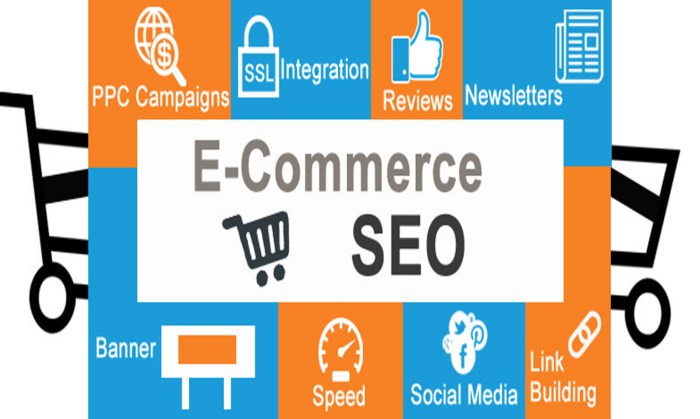
In today’s digital landscape, a robust online presence is paramount for e-commerce success. E-commerce services provide the strategic framework to achieve this, transforming your online store from a hidden gem into a thriving marketplace. By optimizing your website for search engines, you unlock the potential to attract organic traffic, improve brand visibility, and ultimately drive significant sales growth.
This comprehensive guide explores the multifaceted nature of e-commerce , offering insights into effective strategies and best practices.
From technical optimization and on-page enhancements to off-page strategies and compelling content marketing, we’ll delve into each critical element. Understanding the nuances of e-commerce is crucial for navigating the competitive online environment and maximizing your return on investment. We’ll also explore the essential aspects of measuring and analyzing your performance to ensure continuous improvement and adaptation to the ever-evolving search landscape.
Off-Page Optimization for E-commerce
Off-page optimization is crucial for boosting an e-commerce website’s search engine rankings and driving organic traffic. Unlike on-page optimization, which focuses on website elements, off-page optimization involves activities performed outside your website to improve its online presence and authority. This includes building relationships, generating positive brand awareness, and ultimately, enhancing your site’s credibility in the eyes of search engines.
A strong off-page strategy complements on-page efforts, creating a powerful synergy for better search results.
Link Building for E-commerce Websites
Link building remains a cornerstone of successful . High-quality backlinks from reputable websites signal to search engines that your e-commerce site offers valuable content and products, thereby increasing its authority and ranking potential. Ethical link-building focuses on earning links naturally through valuable content creation and outreach, rather than employing manipulative tactics. Effective strategies include guest blogging on relevant industry websites, creating high-quality infographics and other shareable content, participating in online communities and forums, and building relationships with influencers.
Avoid black hat techniques such as buying links or participating in link schemes, as these can severely harm your website’s ranking. Focusing on building relationships with other websites in your niche is key; a collaborative approach is much more effective than attempting to acquire links through artificial means.
The Role of Social Media Marketing in Driving Traffic and Enhancing Brand Visibility
Social media marketing is an invaluable tool for e-commerce businesses. Platforms like Facebook, Instagram, Pinterest, and TikTok offer opportunities to engage directly with potential customers, build brand awareness, and drive traffic to your website. A well-executed social media strategy involves creating engaging content, running targeted advertising campaigns, and interacting with your audience. This fosters a sense of community around your brand and can significantly increase brand loyalty.
Consistent posting of high-quality images and videos, along with interactive content such as polls and quizzes, keeps your audience engaged and encourages sharing, leading to increased visibility and organic reach. Furthermore, social media platforms provide valuable data on customer preferences and behavior, which can inform your marketing and product development strategies.
Benefits of Local for E-commerce Businesses with Physical Locations
For e-commerce businesses with physical stores, local is essential for attracting customers in their geographical area. Optimizing your Google My Business profile, ensuring consistent NAP (Name, Address, Phone number) information across online directories, and encouraging customer reviews are key strategies. Local improves visibility in local search results, ensuring that customers searching for products or services in your area can easily find your business.
This can lead to increased foot traffic to your physical store and a boost in sales. Furthermore, positive online reviews can build trust and credibility with potential customers, increasing the likelihood of conversion.
Off-Page Optimization Strategies Categorized by Effectiveness and Cost
The effectiveness and cost of off-page optimization strategies vary considerably. Here’s a breakdown:
- High Effectiveness, High Cost: Paid advertising campaigns (e.g., Google Ads, social media ads), influencer marketing collaborations.
- High Effectiveness, Moderate Cost: Guest blogging on high-authority websites, creating high-quality, shareable content (infographics, videos), public relations outreach.
- Moderate Effectiveness, Low Cost: Social media engagement, directory submissions, online forum participation, local business listing optimization.
- Low Effectiveness, Low Cost: Commenting on blogs (if done ethically and relevantly), participating in low-authority forums.
Content Marketing for E-commerce
Content marketing is crucial for e-commerce success. It builds brand awareness, drives organic traffic, and ultimately boosts sales by establishing trust and authority within your niche. By creating high-quality, valuable content, you can attract potential customers who are actively searching for solutions you offer, converting passive browsers into loyal buyers. A well-executed content strategy significantly improves your search engine rankings, leading to increased visibility and a higher return on investment.
Creating Blog Posts that Attract Organic Traffic and Improve Search Rankings
Effective blog posts for e-commerce should focus on solving customer problems and addressing their needs. research is paramount; identifying relevant search terms allows you to create content that ranks highly in search engine results pages (SERPs). For example, an online retailer selling hiking boots could create blog posts on topics like “Choosing the Right Hiking Boots for Your Next Adventure,” “Best Hiking Boots for Beginners,” or “How to Care for Your Hiking Boots.” These posts should be comprehensive, informative, and engaging, incorporating high-quality images or videos to enhance user experience.
Internal linking to relevant product pages within the blog posts is essential for driving conversions. Optimizing meta descriptions and titles with relevant s further increases the chance of ranking higher in search results.
Examples of Successful E-commerce Content Marketing Campaigns
Many successful brands leverage content marketing effectively. For instance, Sephora’s blog features articles on makeup tutorials, skincare advice, and beauty trends, creating a community around their brand and driving traffic to their product pages. Similarly, Patagonia, an outdoor apparel company, publishes blog posts focusing on environmental sustainability and adventure stories, aligning with their brand values and attracting a loyal customer base.
These campaigns demonstrate that effective content marketing isn’t just about selling products; it’s about building relationships and providing value to the target audience. The success of these campaigns can be measured by increased website traffic, improved brand awareness, and ultimately, higher sales.
Creating Engaging Product Descriptions that Convert Visitors into Customers
Compelling product descriptions are essential for converting website visitors into customers. Instead of simply listing features, focus on highlighting the benefits and solving customer pain points. For example, instead of writing “This shirt is made of 100% cotton,” write “Experience ultimate comfort with our 100% cotton shirt, perfect for all-day wear.” Use strong action verbs and descriptive language to paint a vivid picture of the product in the customer’s mind.
Include customer reviews and testimonials to build trust and social proof. High-quality product images and videos further enhance the shopping experience. A/B testing different descriptions can help optimize conversion rates.
Developing a Content Calendar that Supports E-commerce Goals
A well-structured content calendar is crucial for maintaining consistency and achieving goals. It should Artikel topics, s, publication dates, and assigned writers or editors. Consider using a spreadsheet or dedicated content calendar software. Align your content calendar with your overall marketing strategy and goals. Prioritize topics that align with high-volume, low-competition s.
Regularly review and update the calendar based on performance data and emerging trends. This ensures your content remains relevant and effective in driving organic traffic and achieving your business objectives. For example, a monthly calendar might include blog posts, social media updates, email newsletters, and other content formats, all strategically planned to support your goals and seasonal promotions.
Measuring and Analyzing E-commerce Performance
Understanding how your e-commerce strategy is performing is crucial for continued growth and profitability. Regularly measuring and analyzing key performance indicators (KPIs) allows you to identify what’s working, what’s not, and where to focus your efforts for optimal results. This involves tracking various metrics, analyzing the data, and using those insights to refine your approach.
Key Performance Indicators (KPIs) for E-commerce
Effective e-commerce relies on monitoring a range of KPIs to gauge success. These metrics provide a comprehensive view of your website’s performance and the impact of your strategies. Focusing on the right KPIs allows for data-driven decision-making and optimization.
| KPI | Description | How to Track | Interpretation |
|---|---|---|---|
| Organic Search Traffic | The number of visitors arriving at your website from organic search results. | Google Analytics, Search Console | Higher traffic generally indicates improved performance, but needs to be correlated with conversions. |
| Conversion Rate | The percentage of website visitors who complete a desired action (e.g., purchase, sign-up). | Google Analytics, E-commerce platforms | A higher conversion rate signifies effective and website design working together. |
| Average Order Value (AOV) | The average amount spent per order. | E-commerce platforms | Increased AOV suggests successful upselling or cross-selling strategies. |
| Bounce Rate | The percentage of visitors who leave your website after viewing only one page. | Google Analytics | A high bounce rate may indicate poor website design, irrelevant content, or technical issues. |
Methods for Tracking Website Traffic, Conversions, and Other Relevant Metrics
Reliable tracking methods are essential for accurate assessment of your efforts. This involves using appropriate tools and configuring them correctly to capture relevant data.
Google Analytics remains a cornerstone for tracking website traffic, providing detailed insights into user behavior, including sources of traffic, pages visited, time spent on site, and conversion rates. Integrating Google Analytics with your e-commerce platform allows for comprehensive tracking of sales and revenue generated from organic search traffic. Google Search Console complements Google Analytics by offering data on how your website appears in Google search results, including rankings, click-through rates (CTR), and any technical issues affecting your site’s indexing.
Strategies for Analyzing Data to Identify Areas for Improvement
Analyzing your data isn’t just about looking at the numbers; it’s about understanding the story they tell. This involves identifying trends, patterns, and anomalies to pinpoint areas needing attention.
Regularly review your Google Analytics and Search Console data, paying close attention to trends over time. Compare your performance against industry benchmarks and competitors. Identify s with high search volume and low competition to target for improved organic rankings. Analyze your bounce rate and time on site to understand user engagement and identify areas for content improvement.
Investigate any sudden drops in traffic or conversions to identify potential issues, such as technical errors or algorithm updates.
Sample E-commerce Performance Report
A well-structured report simplifies the interpretation of complex data. This sample report demonstrates key metrics and their interpretations.
| Metric | Value | Trend | Interpretation |
|---|---|---|---|
| Organic Search Traffic | 10,000 | +15% (MoM) | Significant increase indicating successful efforts. |
| Conversion Rate | 2.5% | +0.5% (MoM) | Slight improvement, suggesting optimization opportunities remain. |
| Average Order Value (AOV) | $75 | – $5 (MoM) | Requires further investigation; potential pricing or upselling issues. |
| Bounce Rate | 40% | -5% (MoM) | Improvement, but still high; further website optimization needed. |
Services Overview
E-commerce businesses rely heavily on search engine visibility to attract customers. A comprehensive strategy is crucial for success, and many businesses outsource this work to agencies or freelancers specializing in services. These services cover a broad range of activities, each designed to improve organic search rankings and drive targeted traffic to an online store. Understanding the different services available, their pricing structures, and the factors to consider when choosing a provider is key to making an informed decision.
Various services are offered, ranging from basic research and on-page optimization to advanced technical and link building campaigns. Agencies and freelancers typically package these services differently, catering to various business needs and budgets. Understanding these options allows e-commerce businesses to select the most suitable services to meet their specific goals.
Types of Services Offered
A wide array of services are available. These typically include research to identify relevant search terms, on-page optimization focusing on website content and structure, technical addressing website crawlability and indexability, off-page optimization involving link building and brand mentions, and content marketing strategies to create valuable and engaging content. Some agencies also offer local services for businesses targeting specific geographic areas, international for businesses expanding globally, and even specialized services like Amazon .
The specific services offered and their depth vary widely depending on the agency or freelancer.
Service Pricing Models
Different pricing models exist for services. Common models include hourly rates, project-based fees, retainer agreements, and performance-based pricing. Hourly rates charge clients for the time spent on tasks. Project-based fees involve a fixed price for a defined scope of work. Retainer agreements provide ongoing services for a monthly fee.
Performance-based pricing ties fees to the achievement of specific results, such as increased organic traffic or rankings. The choice of pricing model significantly impacts the overall cost and predictability of the investment. For example, a small e-commerce business might opt for a project-based approach for a website redesign, while a larger business might prefer a retainer agreement for ongoing support.
Factors to Consider When Selecting an Service Provider
Choosing the right service provider requires careful consideration of several factors. These include the agency’s experience and expertise in e-commerce , their understanding of the client’s industry and target audience, their approach to technical , their link-building strategies, their reporting and communication practices, and their pricing model. Client testimonials and case studies can offer valuable insights into the agency’s past performance.
It is crucial to assess the provider’s transparency and their ability to demonstrate a clear understanding of the client’s business objectives and the metrics used to track progress. For example, an agency demonstrating a strong understanding of Google Analytics and its application to e-commerce is highly desirable.
Importance of a Transparent and Data-Driven Approach in Services
A transparent and data-driven approach is essential for successful . Transparency involves clear communication about the strategies employed, the progress made, and any challenges encountered. A data-driven approach uses analytics to track performance, measure results, and inform future strategies. This includes using tools like Google Analytics, Google Search Console, and other relevant analytics platforms to monitor key performance indicators (KPIs) such as organic traffic, rankings, conversion rates, and bounce rates.
Regular reporting and analysis are crucial to ensure the strategy remains effective and aligned with the client’s goals. For example, consistent monitoring of rankings allows for timely adjustments to the strategy if necessary, maximizing the return on investment.
Mastering e-commerce is an ongoing process, requiring a blend of technical expertise, creative content strategy, and consistent monitoring. By implementing the strategies Artikeld in this guide, businesses can effectively optimize their online presence, attract targeted traffic, and convert visitors into loyal customers. Remember that a data-driven approach, coupled with a keen understanding of your target audience, is essential for long-term success in the dynamic world of e-commerce search engine optimization.
FAQ Resource
What is the difference between local and national for e-commerce?
Local targets customers in a specific geographic area, crucial for businesses with physical stores or serving a local market. National aims for broader reach across the country, focusing on s with nationwide appeal.
How long does it take to see results from e-commerce ?
Results vary depending on factors like website competition, strategy implementation, and the overall health of your website. You can expect to see some improvements within a few months, but significant results often take 6-12 months of consistent effort.
Should I hire an agency or manage my e-commerce in-house?
This depends on your budget, technical expertise, and available resources. Agencies offer specialized knowledge and dedicated resources, while in-house management offers greater control but requires significant time and expertise.
What is the role of schema markup in e-commerce ?
Schema markup helps search engines understand your website’s content better, leading to richer snippets in search results (e.g., star ratings, prices). This improved visibility can increase click-through rates.